
Why your organization needs Identity Governance

Why your organization needs Identity Governance

Identity Governance helps organizations control who has access to what, reduce security risks, support compliance, and improve visibility across the business. As organizations adopt more cloud services, SaaS applications, and hybrid work models, Identity Governance has become an essential part of an effective Identity and Access Management (IAM) strategy.


1. Strengthen compliance and audit readiness

Organizations are expected to demonstrate that access to sensitive systems and data is properly managed. Regulations such as GDPR, industry standards like ISO 27001, and internal security policies all require organizations to maintain appropriate access controls and document how they are governed.

Identity Governance helps organizations establish structured access management processes, document access decisions, and provide evidence during audits. It also supports regular access reviews, making it easier to verify that users only have the permissions they need.

2. Reduce security risks

Most cyberattacks today target identities rather than infrastructure. Excessive permissions, orphaned accounts, and weak access governance significantly increase the attack surface.

Identity Governance reduces these risks by supporting key security principles such as:

  • Least Privilege access

  • Removal of orphaned accounts

  • Segregation of Duties (SoD)

  • Regular access reviews and certifications

Together, these controls help reduce the risk of unauthorized access while strengthening the organization's overall security posture.Identity Visibility & Intelligence Platforms (IVIP)
 

3. Gain complete visibility into user access

You cannot manage what you cannot see.

In many organizations, user access is distributed across multiple applications, making it difficult for both IT and business managers to understand who has access to what.

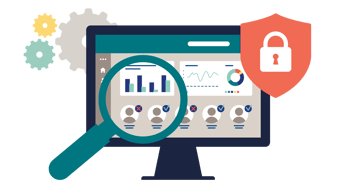
Identity Governance provides a centralized view of user identities, roles, and permissions across connected systems. It also supports periodic access reviews, allowing managers to verify that employees still require their assigned access and documenting those decisions for compliance purposes.

4. Involve the business in access decisions

Access management is not solely an IT responsibility. Business managers are best positioned to determine which employees require access to specific systems and information.

Identity Governance presents access information in a business-friendly format, enabling managers to request, approve, review, and remove access without requiring technical expertise.

By involving the business in governance processes, organizations improve both security and accountability.

5. Improve cost control

Unused accounts and unnecessary software licenses often represent significant hidden costs.

Identity Governance helps organizations identify inactive users, unused applications, and unnecessary access rights. It also reduces the administrative workload for IT by automating governance processes and involving business managers in access decisions.

The result is better license utilization, lower administration costs, and improved operational efficiency.

6. Close the gaps left by Identity Management


Identity Management automates user provisioning, synchronizes identities, and manages the user lifecycle across connected systems. While this provides an excellent foundation, it does not always provide sufficient visibility or governance.

Changes made directly within business applications, excessive permissions, or policy violations may remain unnoticed.

Identity Governance complements Identity Management by continuously monitoring access, identifying policy violations, and highlighting discrepancies across connected systems.CW_illustrasjon_puzzle

 

7. Complement your Identity Management strategy

Identity Management and Identity Governance solve different challenges and deliver the greatest value when used together.

Identity Management focuses on creating users, provisioning access, and automating lifecycle processes. Identity Governance adds visibility, access reviews, policy enforcement, and business involvement to ensure access remains appropriate over time.

Together, they help organizations strengthen security, improve compliance, and maintain control as the IT environment continues to grow.

Identity Governance is essential for effective IAM

As organizations adopt more cloud services, SaaS applications, and AI-powered tools, managing identities and access becomes increasingly complex.

Identity Governance helps organizations maintain visibility, reduce risk, support compliance, and ensure that the right people have the right access at the right time. Combined with Identity Management, it provides the governance and control needed to build a secure, scalable, and future-ready IAM strategy.